
How is low testosterone diagnosed?
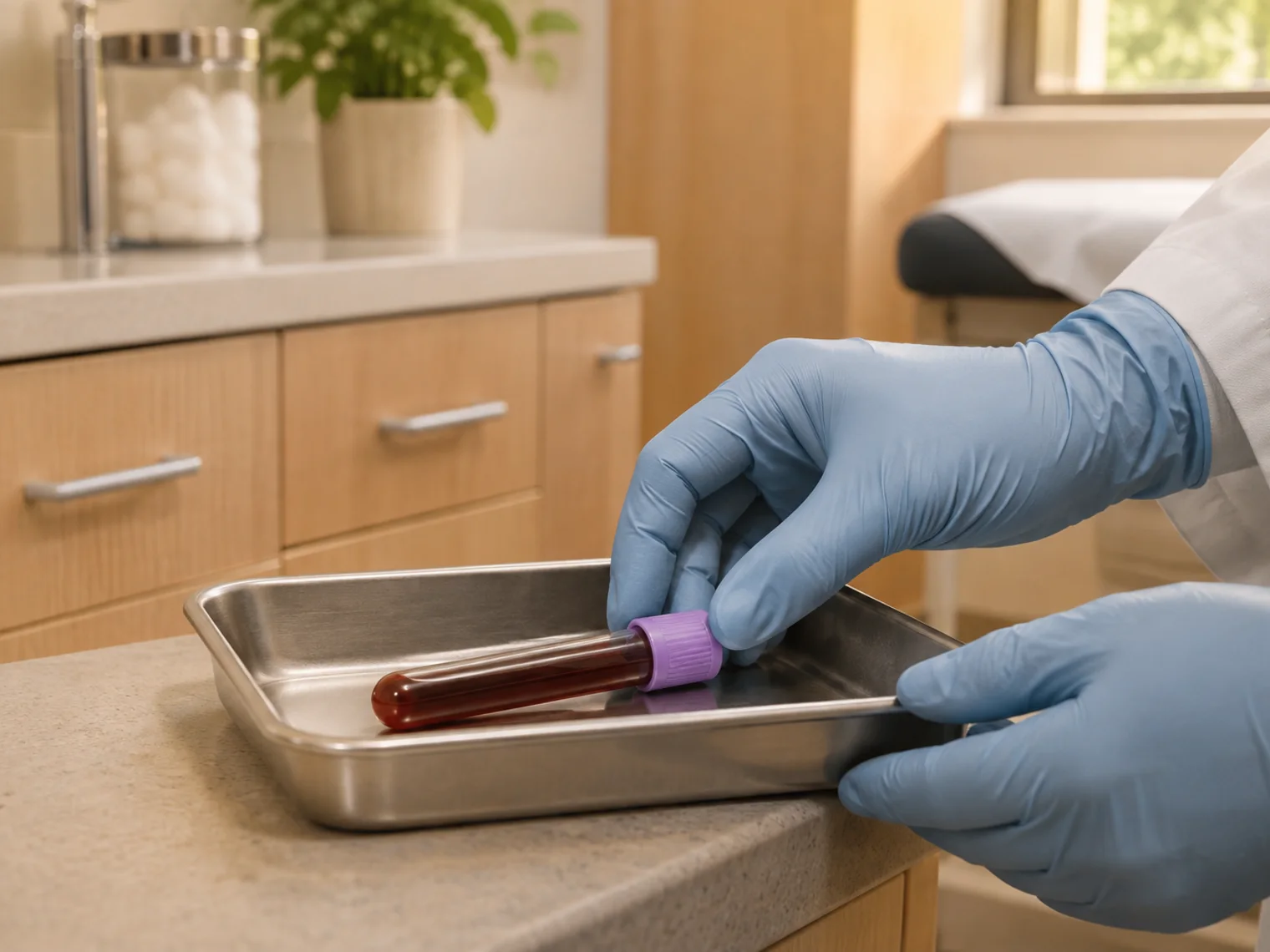
People usually ask how low testosterone is diagnosed after they notice symptoms and wonder whether a single test will settle it. The source below says it does not.
Two morning tests, not one
The Endocrine Society describes what a diagnosis of hypogonadism requires. To get a diagnosis of hypogonadism, you need at least two early morning (7–10 AM) blood tests that reveal low testosterone in addition to signs and symptoms typical of low testosterone.
The Endocrine Society's page adds one point on repeat testing. Testosterone must be measured more than once for accurate assessment.
Why the timing matters
Two details shape the process. The blood draws are early in the morning, between 7 and 10 AM, and there is more than one of them. A reader planning ahead should treat the draw as a scheduling question first.
It is also worth asking your clinic how early appointments are handled before you book. For a plain-language look at the test itself, see the MedlinePlus testosterone levels test page.
What to do next
Write down your symptoms and when they started, then ask a clinician about testing. The diagnosis itself comes from that clinician.
Three other pages are worth a look for further reading. WebMD discusses low testosterone therapy risks and benefits. A review in PMC looks at hypogonadism in the aging male. Cleveland Clinic explains testosterone replacement therapy.
Related questions: what are the signs of low testosterone and low T treatment: when is it recommended.
A locally minded note
A morning blood draw has to fit around the rest of your day. Readers in Westfield and nearby towns such as Cranford, Summit and Millburn can plan for that when they ask about testing. The full list of questions is on the low testosterone symptoms and diagnosis page.